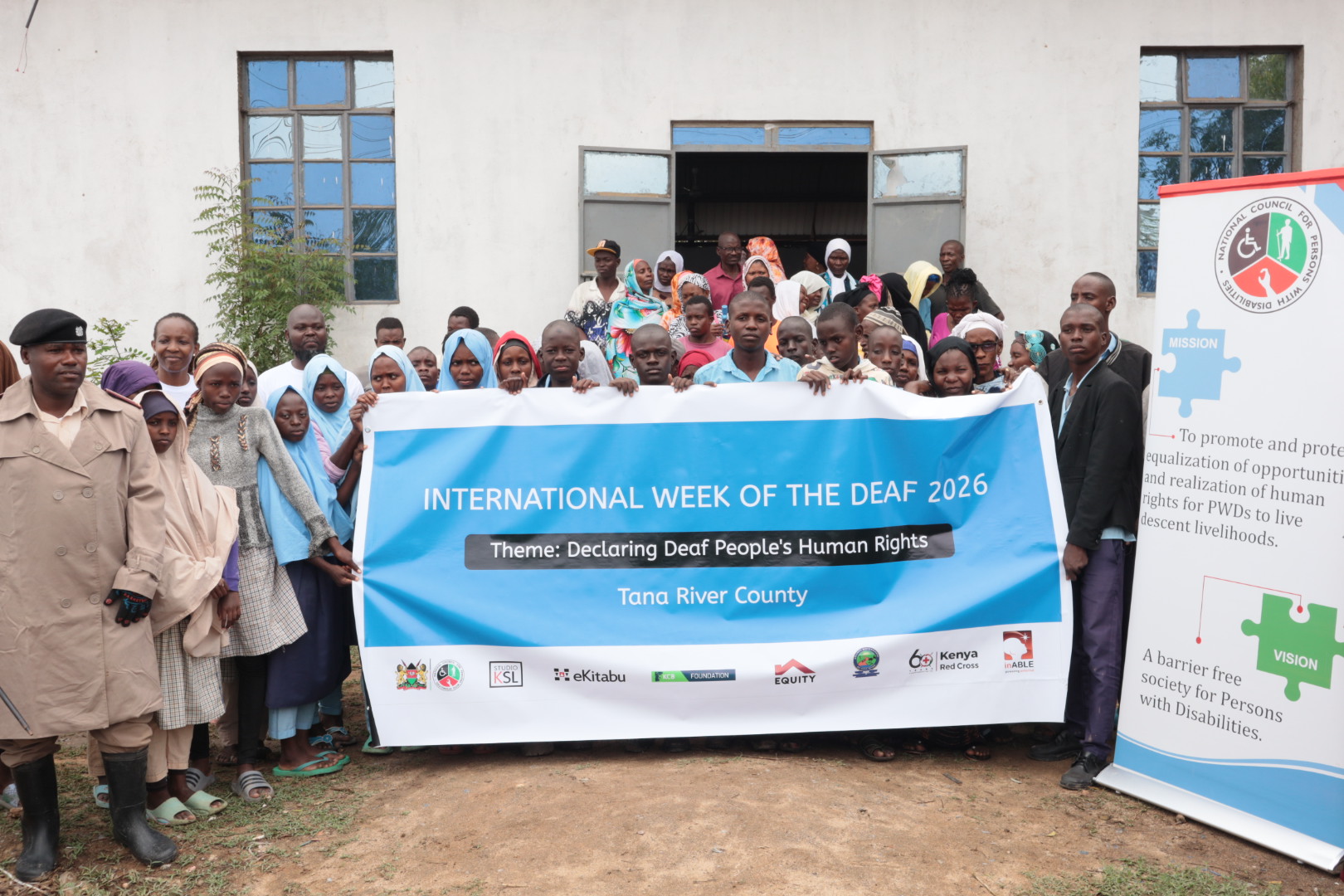
On 22 September 2026, Hola Social Hall in Tana River County became a gathering place for Deaf learners, teachers, families, community members, government representatives and local organisations as they commemorated the International Week of Deaf People 2026 under the theme, “Declaring Deaf People’s Human Rights.”
The event included conversations about the rights of children with disabilities—and Deaf children in particular—closer to the communities where barriers to education, communication and participation remain a reality for many families.
At the heart of the gathering were the approximately 65 Deaf learners at Hola School for the Deaf, many of whom come from pastoralist communities across the county.
For some families, limited awareness about disability and the educational potential of Deaf children can mean that children remain at home, enrol in school later than their peers or miss opportunities to learn and participate fully in their communities.
That made Hola an important setting for this year’s commemoration.
The day also provided an opportunity to engage parents, community members, government representatives and other local actors around a shared message: Deaf children have a right to language, education, participation and equal opportunities.
A Day of Celebration, Visibility and Community Engagement
The commemoration began with a community hall meeting that brought learners, teachers and stakeholders together with the wider Hola community.
Through messages promoting Deaf people’s rights, Kenyan Sign Language and access to education, the gathering created space for greater awareness and dialogue around the experiences of Deaf people in the community.
For the learners, however, the day was also about joy, connection and belonging.
A fun day gave learners an opportunity to interact, play, participate in different activities and celebrate together. Their presence and participation placed Deaf children at the centre of the commemoration—not simply as beneficiaries, but as young people with their own identities, aspirations and right to be included.
The celebrations were followed by engagement with parents, community members and invited stakeholders, culminating in discussions on the rights of Deaf people and the responsibilities of families, communities and government institutions in helping to realise those rights.
Among the issues highlighted were the importance of identifying Deaf children early, enrolling them in school, creating opportunities for families to communicate with their children, and ensuring that public services and information are accessible through Kenyan Sign Language.
Bringing Stakeholders Together
The commemoration also brought together a diverse group of institutions and community actors, including representatives from the National Council for Persons with Disabilities (NCPWD), the Office of the Deputy County Commissioner, the County Government Department of Gender, Tana River Disability Representatives, Huduma Centre, and the Tana Sanitary and Mentorship Initiative.
The school community was represented by the Headteacher of Lisa Hola School for the Deaf, together with teachers and learners.
Bringing these stakeholders around the same table was significant—reating an inclusive environment for Deaf children cannot be the responsibility of schools alone.
It requires families who recognise and support their children’s potential, communities that challenge stigma, accessible public services, and government institutions that understand and respond to the specific language and accessibility needs of Deaf people.
The gathering provided an opportunity for stakeholders who interact with persons with disabilities in different capacities to listen to the experiences and priorities of the Deaf community and consider how they can contribute to creating more inclusive systems.
Taking the Conversation Beyond Hola
The message from Hola did not remain within the school or the surrounding community.
The commemoration attracted coverage from Citizen TV, taking the conversation about Deaf people’s rights and access to services to a national audience.
The feature highlighted calls for greater access to Kenyan Sign Language, including the need for government institutions to provide sign language interpretation so that Deaf people can access information and public services.
Watch the Citizen TV feature:
“Walemavu wa kusikia wataka serikali iajiri watafsiri wa lugha ya ishara”
https://youtu.be/pg7gQsGhiL0
The media coverage provided another platform for Deaf people and their allies to articulate some of the barriers that continue to affect participation in everyday life.
For eKitabu, the commemoration reinforced the importance of taking conversations about inclusion beyond national forums and urban centres and into communities where children with disabilities continue to experience barriers to education and participation.
Declaring Rights, Advancing Inclusion
The learners of Hola School for the Deaf were at the centre of the day—not simply as beneficiaries of a commemoration, but as children whose language, identities, abilities and aspirations deserve to be recognised, respected and celebrated.
The International Week of Deaf People provides an opportunity to raise awareness and declare rights. But meaningful inclusion requires sustained action: ensuring children have access to education, families have the tools to communicate with them, public services are accessible, and Deaf people can participate fully in the communities and systems that affect their lives.
From Hola, the message was clear: every Deaf child deserves to be seen, heard, educated and included.
Declaring their rights is only the beginning. Ensuring that they can exercise those rights is the work that must continue.