The Hands That Speak: How Deaf Teacher Assistants are Transforming Early Learning in Africa
- Latest News
In classrooms across Rwanda and Malawi, a quiet revolution is underway. Deaf and hard-of-hearing learners, who have long faced barriers to quality education, are now experiencing a more inclusive, engaging, and supportive learning environment—thanks to the dedication of deaf teacher assistants and innovative training programmes led by eKitabu in collaboration with Open Development & Education, Royal Dutch Kentalis, Busara Centre for Behavioural Economics, under the Scaling Inclusive Early Learning with Deaf Children project, funded by GPEKIX initiative through Canada’s IDRC.

Certified Deaf teachers after 4 days of the Teacher Professional Development workshop in Rwanda

The team that attended a capacity building workshop in Blantyre, Malawi—Deaf teacher assistants, MANAD representatives, and staff of eKitabu Kenya and Malawi.
Rwanda: Building Sign Language-Rich Classrooms
In November, 25 teachers from five KIX treatment schools gathered at Grazia Apartment Hotel for a four-day Teacher Professional Development (TPD) training. Alongside them were five deaf teacher assistants, whose presence has already begun to reshape classroom dynamics.
One teacher from HVP Gatagara reflected on the difference a deaf teacher assistant makes:
“Having Solange, our Deaf teacher assistant, has been a blessing. My classroom has more than 60 learners with multiple disabilities. I used to summarize lessons in the last seven minutes using sign language. Now, learners are fully included and excited to learn.”
The training introduced teachers to Universal Design for Learning (UDL) principles, accessible digital content, Kentalis Observation Lists (KOL), child safeguarding, and inclusive teaching methods. Participants engaged in hands-on practice, co-teaching exercises, and digital literacy sessions. By the final day, teachers had not only strengthened their skills but also shared deeply personal experiences—like the story of a deaf learner navigating school while facing severe challenges, including gender-based violence—highlighting the urgent need for supportive systems.
The workshop concluded with commitments from the Rwanda Education Board to integrate deaf teacher assistants into schools, ensuring that the impact of this initiative extends far beyond the training itself.


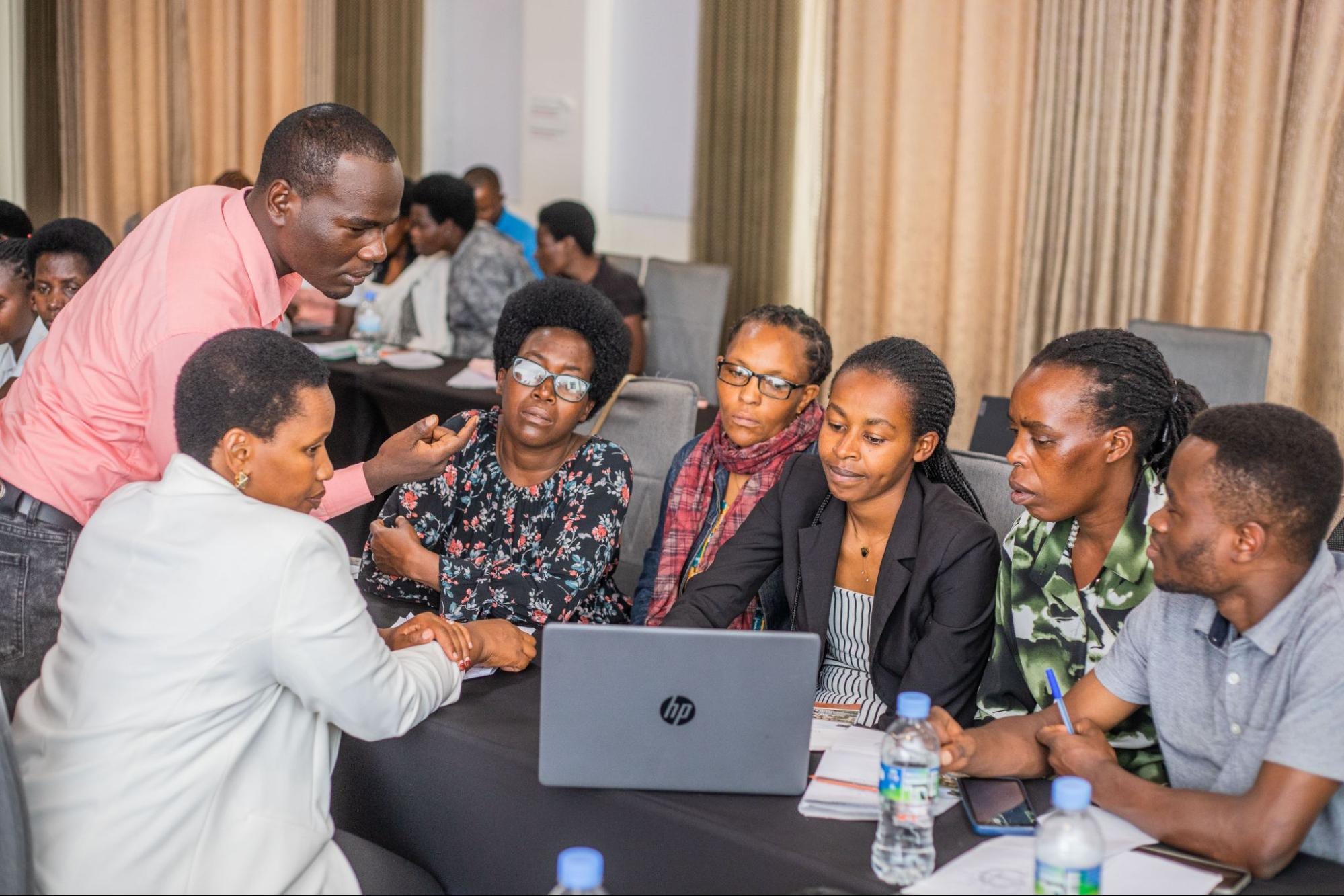
A deaf teacher and a hearing teacher share the challenges they experienced with their students.


Small groups working together, with each group having a team member to help with the logbook.
Malawi: Piloting Tools for Inclusive Learning
Earlier in June, a five-day workshop in Blantyre, Malawi, focused on localizing and piloting the Research Sign Language Assessment Tools (RSLAT). Deaf teacher assistants, alongside representatives from the Malawi National Association of the Deaf (MANAD), reviewed the tools, practised administering assessments, and piloted them in classrooms at Mountain View School for the Deaf.
The workshop was designed to address systemic barriers in Malawi, such as limited recognition of Malawian Sign Language (MSL) in early childhood education and a shortage of educators fluent in MSL. Teachers practised new strategies, built relationships with learners, and explored inclusive assessment methods—laying a foundation for improved early learning outcomes and more equitable access to education for deaf children.
“The practical exercises allowed us to understand the tools and build confidence in administering them,” shared a workshop participant. “We can now better support learners and adapt lessons to their needs.”
The Human Impact
Across both Rwanda and Malawi, the most profound change comes not from the tools or manuals, but from the people—the teachers and deaf assistants—who bring them to life. Classrooms are becoming spaces where deaf learners are no longer left behind, where children feel seen and heard, and where educators feel empowered to include every child.
These workshops have also highlighted critical gaps, from digital literacy challenges to resource constraints, and set action points to ensure continuous support, follow-up, and mentorship. Yet, the stories shared—from teachers to learners—underscore a powerful truth: inclusive education is possible when we combine training, empathy, and innovation.
With ongoing commitment, this project is laying the groundwork for classrooms where every child, regardless of ability, can thrive—one sign, one lesson, and one teacher at a time.

Deaf teachers reviewing the Research Sign Language Assessment Tools during the capacity building workshop in Blantyre, Malawi, in June 2025.

Deaf teachers administering the Research Sign Language Assessment Tools to a group of deaf learners from Mountain View School for the Deaf in Blantyre, Malawi.